
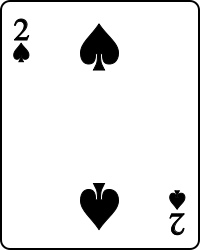
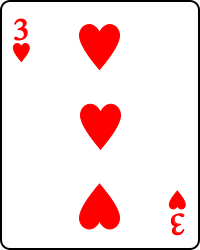
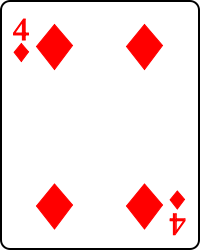
1, 2, 3, 4
(3 + 2 + 1) x 4 = 24
There are several distinct answers. Reordering a commutative operation does not create a new answer, so 4 x (3 + 2 + 1) is equivalent to the expression shown.
Use four numbers exactly once and combine them with basic arithmetic to make 24.
These examples use the same four-number rule as the game.
1, 2, 3, 4
(3 + 2 + 1) x 4 = 24
There are several distinct answers. Reordering a commutative operation does not create a new answer, so 4 x (3 + 2 + 1) is equivalent to the expression shown.
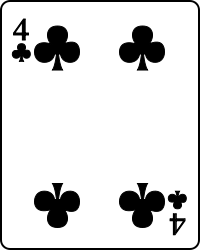

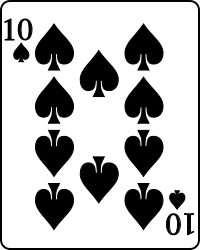
4, 4, 10, 10
(10 x 10 - 4) / 4 = 24
Use every card exactly once. You can work in steps: 10 x 10 = 100, 100 - 4 = 96, and 96 / 4 = 24.
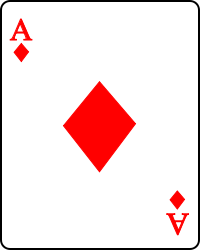
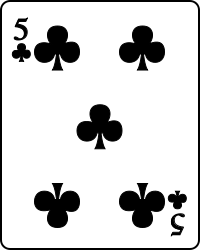
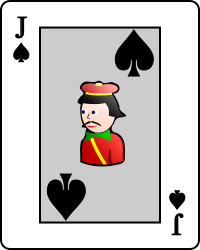
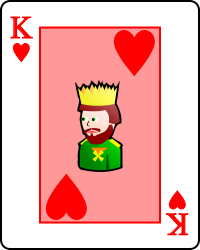
1, 5, 11, 13
No solution with +, -, x, and /
Some combinations cannot reach 24 under the standard rules. Exponentiation would make a different puzzle, so it is not allowed here.
Ace counts as 1. Jack counts as 11, Queen as 12, and King as 13. Suits do not affect the calculation.
Choose two current numbers, choose an operation, and replace them with the result. Repeat until one number remains.
Order matters for subtraction and division. Division by zero is never allowed, and intermediate fractions are valid.
Do not concatenate digits or use powers, roots, factorials, or extra numbers. The final value must be 24.
Yes. Fractions can appear in an intermediate step as long as the final value is exactly 24 and all four starting values are used once.
Only when that number appears on more than one card. A pair of 4 cards gives you two 4s; one card cannot be used twice.
Some expressions are mathematically equivalent, such as changing the order of an addition. The solver groups equivalent expressions to keep the answer list useful. See the solution theory for the details.
Some four-number sets cannot make 24 with the standard operations. You can skip the puzzle in a game or try another set in the solver.
KEEP EXPLORING
Explore solution theory, browse related sources, or start playing.